Eastern Anatolia & Mesopotamia Tour
Embark on a fascinating journey through the dramatic landscapes and rich heritage of Eastern Anatolia and Mesopotamia offering Turkey’s lesser-known yet deeply captivating regions.
Prices starting from
3300 Euro per person based on 3* hotel
3475 Euro per person based on 4* hotel
3675 Euro per person based on 5* hotel
Prices include
*All airport pickup and transfers in Gaziantep and Erzurum
*13 night accommodation with breakfast
*12 full day small group tours including transportation, guidance, admission fees and lunches excluding beverages.
*All applicable taxes
-No 5* hotels in Adiyaman and Dogubayazit so best available hotels will be given instead.
Arrival in Gaziantep
Airport pickup and transfer to your hotel. Overnight in Gaziantep.
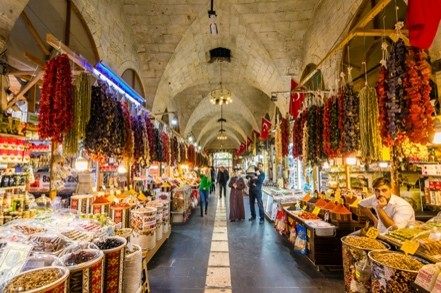
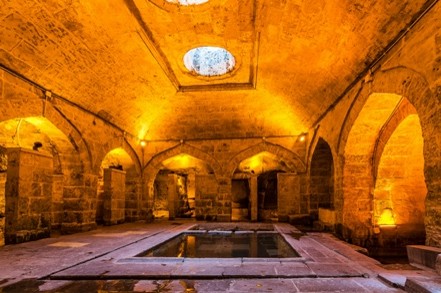
Today we will start our day with a visit to the Zeugma Museum. The splendid collection of the museum is sufficient enough to make it one of the most important mosaic museums in the world. Later on we will visit Pisirici Kasteli which is one of the most important underground water structures in the city. It is thought to have been constructed in 13th century. Then we will continue visiting the following markets and hans: Almaci Bazaar, where you can buy variety of local produce fresh fruits, vegetables, dried fruits, nuts and spices. Bakircilar Bazaar, where you can see coppersmiths and other artisans work at their crafts in the narrow streets. Zincirli Bedesten, one of the oldest bazaars in the city, selling products from textiles to souvenirs. Tutun Han, which used to be the place for tobacco tradesman. Gumruk Han and Millet Han, other important hans that were built in 19th century in typical Ottoman architectural style. Then we will visit Kaleoglu Cave, a café nestled in the almost 500 year old underground cave. Afterwards we will continue to the impressive Kurtulus Mosque, initially constructed as an Armenian cathedral in 1892. Our final stop will be walking around the old narrow streets of Gaziantep where we can admire the traditional old Gaziantep Houses. Overnight in Gaziantep.
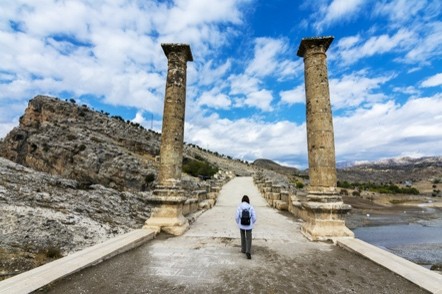
We will depart from Gaziantep for Nemrut. On the way we stop in Halfeti. Halfeti is a peaceful town above Euphrates. Due to construction of a dam, half of the town was inundated. We will take a boat ride towards Rumkale, the rocky bluff on top which sits a ruined fortress. We will pass by Savasan, another partly inundated village. After the boat ride, we will walk a little in the village of Halfeti and take some photos. Afterwards we continue to Nemrut. We will visit Karakus Tumulus, a monumental tomb which was built as a mausoleum for the royal family by the King Mithradates to be dedicated to his mother. After we will visit Cendere Bridge, one of the oldest bridges in the world still in use today. Then we will visit ancient city of Arsemia, the summer capital and administration city of the Commagene Kingdom. Our final stop of the day will be Nemrut Mountain, where we will view one of the best sunsets in the world amongst the mass-stone monuments erected at the summit. Overnight in Adiyaman.
Drive from Nemrut to Sanlirfa. Our first stop will be Gobeklitepe, the first temple of the world. It is considered as the most significant archaeological discovery of the 21st century that dates back to 12 thousand years ago. It is believed to be a centre of faith and pilgrimage during Neolithic Age. Afterwards we will visit Sanliurfa Archaeology Museum, featuring one of the richest finding collections in Turkey. Then we will continue to Haleplibahce Mosaic Museum that is home to the world’s most valuable and delicate mosaics. It is the largest new museum complex in Turkey. Later we will continue to Balikli Gol (Halil-ul Rahman Lake) and Ayn Zeliha Gol and right adjacent to these lakes Rizvaniye Mosque. It is believed that King Nemrut cast the Prophet Abraham from the castle into the flames and God turns the fire into water and the woods into fish, hence the creation of the Halil-ul Rahman Lake. Overnight in Sanliurfa.
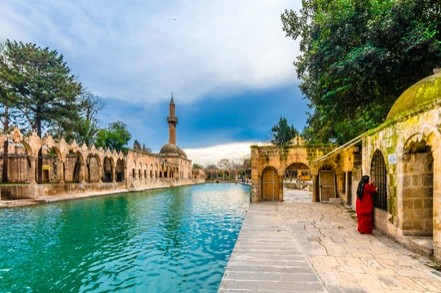
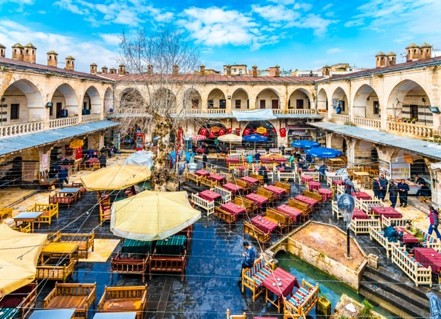
Today we will drive to Harran. We will visit ancient city of Harran, mentioned in the Old testament. The ruins include also the oldest Islamic University, city walls, gates and citadel. Harran is today known more for its unusual beehive dwellings, built of mud and hay. Later we go back to Sanliurfa and continue our visits there. We will visit The Grand Mosque, still standing after serving three religions over a millennium. It was one of the oldest mosques built in the city centre however, it first serves as a synagogue, then sanctuary and finally was turned into church in 5th century. After we will visit Prophet Abraham’s Cave, which is believed that Abraham was born in this cave so regarded as a sacred site. The rest of the day we will wander around the old Bazaars of Urfa. We will visit Bakircilar Bazaar, where you can find souvenirs made from hand beaten copper. We will continue to Sipahi Bazaar, which preserves its identity selling such goods as carpets and kilims. Our final stop will be Gumruk Han, an old caravanserai from Ottoman era. This was one of the city’s trade and business centre. We will sit at one of the cafes here and drink a traditional coffee or tea. Overnight in Sanliurfa.
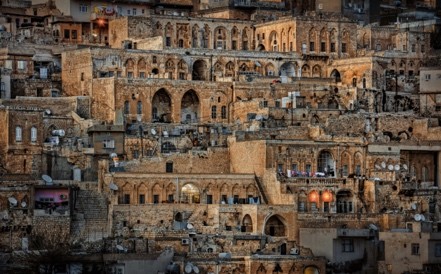
Drive from Sanliurfa to Mardin. On the way we will visit ancient city of Dara. Dara is known as the Ephesus of Mesopotamia, an important settlement on the Silk Road. We reach Mardin, the shining city of Mesopotamia and we start our sightseeing with Sakip Sabanci Museum. Housed in former army barracks, this superb museum showcases the fascination history and culture of Mardin. Then we visit Zinciriye Madrasah. Built in 1385, it is one of the most beautiful historical sites in the old part of Mardin. Our next stop will be Forty Martyrs Church, a Syrian Orthodox church dating back to 6th century. Later we continue with the Grand Mosque of Mardin, a great example of Artuqid Period dates back to 12th century and symbol of Mardin with its sliced dome and minaret. Afterwards we will walk in the old streets of Mardin, admiring its golden stone houses, masterfully built on the steep slopes. The civilizations and culture of thousands of years are reflected in the streets, small squares and traditional dwellings of the city. Overnight in Mardin.
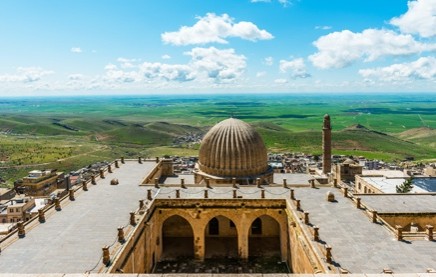
Today we will start our day with visiting Kasimiye Madrasah, an Artuqid Period structure dating back to 15th century. It is the largest structure in Mardin, overlooking endless Mesopotamia Plain. The madrasah was used for several purposes including astronomy and medical science. Afterwards we continue with Deyrulzafaran Monastery, one of the most important monasteries belonging to the Syrian Jacobites and is still active today. Our next visit will be Mor Gabriel Monastery which is one of the oldest Christian monasteries in the world. It was founded in 397 by two monks near Midyat. The extensions were added in different times to meet the need of the increasing number of monks. Later we will head to the city centre of Midyat. We will visit the largest stone house, Midyat Konuk Evi that is located at the highest point in the old town thus the best views. It was used in a very popular Turkish Tv series so it gets a lot of visitors. After we will visit Geluska Han, that is an attractive restored caravanserai. After we will take a look at Telkari Silver Market as the town is famous for its silver jewellery. We will also stop by Suryani Wine House, if you want to taste or buy one of the local wines from this region. We will walk in the old town of Midyat through its narrow streets and huge old sandstone houses with decorative facades. Return back to Mardin. Overnight in Mardin.
Drive from Mardin to Diyarbakir, a vibrant city with breathtaking cultural landscapes on Unesco’s World Heritage List. We will visit City Walls that are 6km long and reinforced with 16 towers with 5 gates. The walls are decorated with inscriptions and present a superb example of medieval military architecture. Then we continue with The Grand Mosque built by the Seljuk Sultan Melik Shah, is notable for its original design and for its utilization of both Byzantine and more ancient architectural materials. We will continue with Mesudiye Madrasah which is next to the mosque. It is from 12th century and made from the local black basalt. It is the first university opened in Anatolia. Later we will see Four Legged Minaret which is a historic tower that balanced on four stone pillars. It is a part of the Seyh Muhtar Mosque. Later we will visit Cahit Sitki Taranci House, a great example of early local architecture, the restored home of the famous Turkish author. We will continue visiting the most beautiful caravanserais, Hasan Pasa Han, a 16th century old caravanserai now has restaurants and gift stores, quite popular for a breakfast spot and Suluklu Han, a 17th century caravanserai which is serving as a café now. Later we will visit the third century Aramaic Church of the Virgin Mary, which is still in use today. Our last stop will be Ongozlu Bridge that is a historic bridge over the river Tigris, built in 1065. Overnight in Diyarbakir.
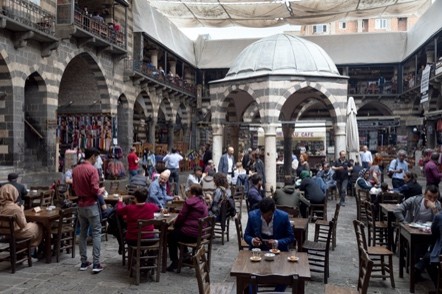
Drive from Diyarbakir to Van. On the way our first stop will be Malabadi Bridge, which has the largest belt among the stone bridges in the world. There are human, lion and sun figures in the south front of the bridge. Before reaching Van, we will take a boat to visit Akdamar Island, the largest of the islands in Lake Van, 4km from the shore and is also home to the famous Akdamar Church. Although the cathedral has been converted to a monument museum, its religious heritage is still unmistakable. It is open for prayer one time in a year. After reaching Van, we will visit the House of Van Cats. Turkish Van Cats are indigenous to the area around Lake Van, pure white and typically have one amber and one blue eye. We will see these beautiful cats and get further information about them. Overnight in Van.
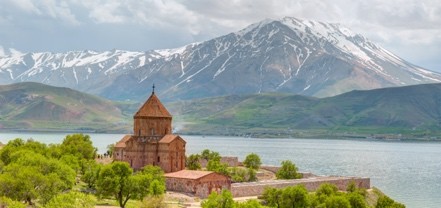
In the morning we will visit Van Castle which was built within the capital of the Urartu State, Tushba during the 9th century B.C. The castle carries imprints of the Seljuk and Ottoman eras too. The castle also contains a mosque built by Sultan Suleiman the Great. Later we will depart for Dogubayazit. After arrival, we will visit Ishak Pasha Palace. It is more of a complex than a mere palace. It is one of the most famous of the palaces built at recent decades and magnificent example of the 18th century Ottoman architecture and very valuable in terms of art history. After we will visit the nearby Old Beyazit Mosque , a 16th century mosque. Overnight in Dogubayazit.
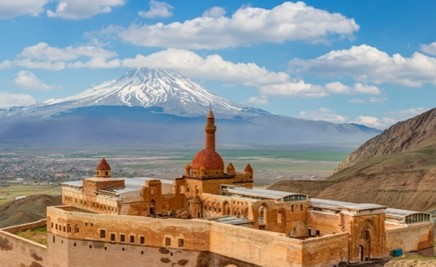
Today we will drive to Ani Ruins. The archeological site of Ani is located on the Silk Road, on a secluded triangular plateau overlooking a deep narrow valley that forms the natural border with Armenia. It is one of the world’s most sacred spots and Turkey’s most impressive medieval ancient cities. It was the former capital of the great medieval Armenian Kingdom. Afterwards we continue to Kars, an important city that is a transit point from Anatolia into the Caucasus. The city centre of Kars looks quite different from the ones of other cities. Magnificent and elegant buildings built during Russian occupation being still in use, add to the city’s architectural legacy. We will see some of these most important buildings during our sightseeing in the centre. Overnight in Kars.
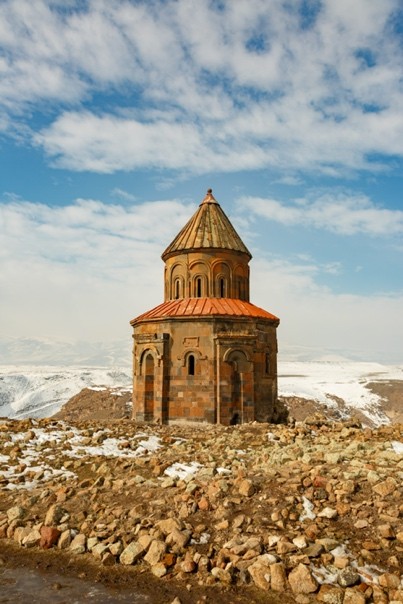
In the morning we will visit Kars Castle, one of Kars’s major landmark. There is an impressive view of the city from the top. After we will visit Kumbet Mosque, built as a church in 10th century during the Bagratuni Kingdom of Armenia. The church was converted to a mosque in 11th century when the Seljuks conquered Kars, then used as a church again in 19th century by the Russians. Later we depart for Erzurum. On the way we will visit Narman Fairy Chimneys. This impressive natural site is notable for its resemblance to Cappadocia. These rock formations are surreal structures with a vibrant, red hue caused by the iron oxide in the sediment. Unlike Cappadocia, there is no mass tourism here so you can enjoy it fully. Overnight in Erzurum.
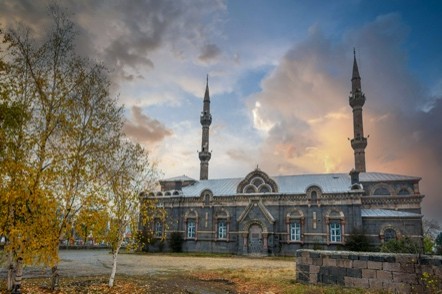
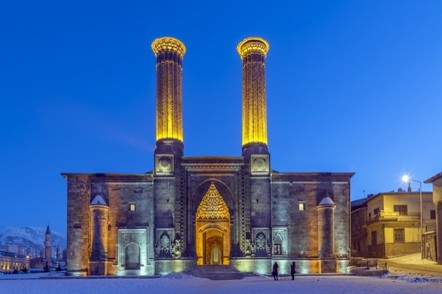
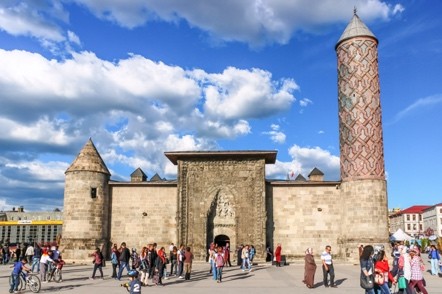
Today we will visit the important sites in Erzurum. Erzurum was an important Seljuk city in 10th and 11th centuries and has many important Seljuk buildings. First we will visit Cifte Minerali Madrasa, Erzurum’s most iconic medieval landmark features twin fluted minarets with detailing in blue glaze on brick. It was built in the second half of the 13th century, after the Mongols had taken over the city from the Seljuks. Then we visit Yakutiye Madrasah, built in 14th century. The entrance is finely decorated with stone carvings and on the minaret there are patterns with small turquoise tiles. Our next stop will be Uc Kumbetler, the cluster of three tombs, one belongs to Emir Saltuk. Later we will visit Tashan, built as a caravanserai in 16th century and now used as a market. Afterwards we continue with The Grand Mosque which is city’s oldest and largest mosque. Our last stop will be Historical Erzurum Houses where you can witness the recent history of the city and how locals lived. Overnight in Erzurum.
Transfer to the airport. Departure and End of our services.